Showing posts with label contemporary art. Show all posts

Thursday, 4 October 2012

CONTEMPORARY


MUMMERY+SCHNELLE

EXHIBITION, VARIOUS ARTISTS

More info on this gallery visit: http://www.mummeryschnelle.com/index.htm

This was a unique little gallery, with very contemporary artists of mixed media and photography and some abstract some thought provoking. There wasn't a huge amount of work here but it was great to see something a little different out of the ordinary.


Ori Gersht, as above

This piece of work was great, I am familiar with Ori Gersht's work as I saw his exhibition at the Imperial War Museum and online too. It is always inspirational to see Gersht's work because it is so unique and mysterious in some aspects. I always associate emotion with his work, purely because of the way he photographs and his subject matter correlates with that idea also. This image above is very striking, as well as being a fairely large print you are immediateness drawn to all the different objects within the powerful explosion. These objects represent fragility, femininity and beauty and he has chosen to explode them into millions of pieces, but creating something equally as beautiful. 


On the right is a piece by Paul Caffell, Painting, 2011
Oil on canvas, unframed 122 x 122cm (48inch)
At the back is Ori Gersht Time after Time, Blow up No. 05 2007
Light Jet Print on Aluminium
250 x 188cm, Edition 1/6


Jyll Bradley, Nobody gives you freedom you have to take it 2010-11
'light drawing' on Bockingford Watercolour paper 190gsm
30 x 22cm, Edition of 3


Louise Hopkins, 4 beds 2008
Acrylic Ink on Magazine page, paper 24 x 20cm

This little piece caught my curiosity and got me really thinking about how Hopkins had done the work. After reading the description it was then clear she had drawn over the original image to create or manipulate something else. I thought it was quite architectural with the lines but I think it's also quite feminine and personal, as if representing her own identity in a way. I am merely assuming these connections with the image, however with little description I felt I was able to come to my own conclusions on all of the work, to me contemporary art is definitely more interesting that way.


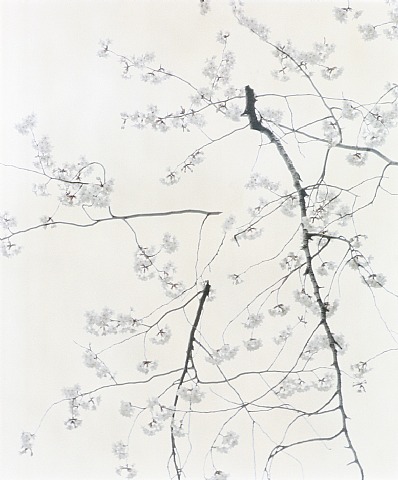
Ori Gersht, Chasing good fortune Hiroshima Sleepless Nights: Never Again 01 2010
Framed archival pigment print on Aluminium
83 x 69cm Edition 1/8

Here is another of Ori Gersht's familiar images, and quite a contrast to the one above, with it's minimalism and simplicity the image comes across as calming and tranquil, it is pleasing to the eye and quite easy to read at first glance. However as I've seen this image before at the Imperial War Museum I know it has a deeper meaning and reflects quite a dark message and that being of sadness and dispair. I feel as though he tries to make something that is quite an unhappy thought into something more pleasant.



Thursday, 26 April 2012

ORI GERSHT


ORI GERSHT: 
THIS STORM IS WHAT WE CALL PROGRESS
25 January 2012 to 29 April 2012

Here is another exhibition piece which I thoroughly enjoyed once again, Ori Gersht is a great artist and hugely inspirational!
This exhibition was quite surreal on first impressions, the work is very abstract and conceptual which makes it very interesting aesthetically. Many of the events featured in Gersht's work centre around World War 2 and the title was derived from an essay by German Jewish philosopher Walter Benjamin.

Gersht re-examines our relationship with this debris through film and photography. (debris of past events.) He uses photography as a metaphor for history and explores the representation of past and present and the links and ruptures between physical traces, cultural symbols and memories.

Gersht is concerned with the relationship between history, memory and landscape. He adopts a poetic and metaphorical approach to explore the difficulties of visually representing conflict and violent events or histories. 
He also pushes the technical limitations of photography, questioning its claim to truth. 


Ori Gersht, 2011
CHASING GOOD FORTUNE: HIROSHIMA SLEEPLESS NIGHTS, NEVER AGAIN 01


Ori Gersht, 2011
CHASING GOOD FORTUNE: TOKYO IMPERIAL MEMORIES: FLOATING PETALS-BLACK WATER 

Ori Gersht used a digital camera at night to create his "petal" work, however the camera sensor struggled to record the correct light and colour information, resulting in stippled images, referencing early colour prints.
Gersht uses this visual "failure" as a device to explore the idea that photography does not present an absolute truth or narrative.

In his images of the "Cherry Blossom", taken in a memorial garden, was photographed at a shrine to Kamikaze pilots, the flowers became loaded with a dark, recent history. Simultaneously the images are beautiful, more positive connotations of the flower in the Buddhist tradition. It reveals complexities of trying to impose a single reading on an image.


WILL YOU DANCE FOR ME
HD FILM
"YEHUDIT ARNON"
The film is about a women who suffered a traumatic childhood and is imagining it all over in a dream like situation. The (old) women is sitting in a chair, now unable to dance like in her younger years, rocks back and forth in an uncomfortable manner with a separate screen featuring a field of thick, deep snow,  the setting she may have experienced many years ago. 
While she was a prisoner in Auschwitz, aged 19 she was ordered to dance at an SS Officer's party. She refused and was punished by making her stand barefoot in the snow. At that point she made a pledge that if she survived she would devote her life to dance. Later she fulfilled her dream with a successful dance company.


If you like the minimalist or abstract style of Art work please check out this website for some more images:

http://crggallery.com/artists/ori-gersht/ 


Monday, 27 February 2012

MONSTERS OF THE ID


David Cotterrell: Monsters of the Id
11 February- 31 March 2012
John Hansard Gallery
University of Southampton 

John Hansard Gallery is one of the UK's leading public galleries of contemporary visual art. Based on the University of Southampton's Highfield campus, it showcases the work of some of the world's most innovative artists and curators through exhibitions, off-site projects, national and international partnerships, research, publications, education and outreach programmes. John Hansard Gallery is part of the University of Southampton and supported by Arts Council England. www.hansardgallery.org.uk


David Cotterrell is an installation artist who works with various types of media, from video, audio, interactive and intelligent technology. He is Proffessor of Fine Art at Sheffield Hallam University and is represented by Danielle Arnaud Contemporary Art, London. www.davidcotterrell.com

Monsters of the Id, derived from the artist's journeys to Afghanistan, explores the illusionary nature of representations of war. Although influenced by his experiences as an artists within a conflict zone, David Cotterrell avoids the drama that is usually witnessed in the media and deliberately takes a more subtle approach to his work.


David Cotterrell, Observer Effect, 2012


Exploring the different rooms set out in this small gallery, it was instantly recognised that they all had something in common and could even be connected somehow. The first room, named, the "Observer Effect" consisted of a panoramic type projection and interactive and virtual land in front of us that seemed to be affected by our presence and immediately we become part of that piece. As we remain stood in front of this landscape, the sensors above detect the number of people and a population of anonymous "avatars" appear in front of us and they grow in number. The work seen throughout is synthetic and explores the idea of viewer to content rather than viewer to Afghanistan.


David Cotterrell, Searchlight 2, 2012


Moving into the "Searchlight 2" room we experience a low platform terrain derived by a tonne and a quarter of chalk, and then allowed the chalk to define its' shape and "fall as it felt". The population witnessed in the "Observer Effect" are generated from the screen and migrate onto this landscape, mirroring the actions seen previously. This terrain has been 3D scanned and used throughout the exhibition which juxtaposes each displays. The sky and the movement however are created in real time and the direction of the avatars is completely randomized and there's no telling of the decisions they will make.


David Cotterrell, Apparent Horizon, 2012


The "Apparent Horizon" is inverted hemispheres that explore the idea of the waiting and searching of information experienced by a soldier, civilian or observer. It again correlates the same landscape projections from the other rooms but here the sky dominates. The display is similar to that used within military simulation. The walls are concave creating an extraordinary optical illusion.

David Cotterrell explains that the technicality remains as invisible as possible and he tries to create a dialogue between artwork and the viewers. When Cotterrell shows the technical aspects of the exhibition we are experiencing the paths that the characters choose to follow, represented by a green line. He tells us that the paths are easily accessible and they lead them towards us and that's how they find their way, exploring how they make decisions without any particular rules. Cotterrell made the choice to eliminate sound and not include photographic backgrounds for the reason that it would cause distraction on the interacting characters and the engaged projection.


David Cotterrell appeared open about his work and also himself as an artist. It was interesting to hear an artist speak about the experiences he went through to produce such an interesting piece of work. He quotes,

"It was like learning a new language, I watched myself struggle and I could've know more about it"


CHARLOTTE COTTON


Story Telling

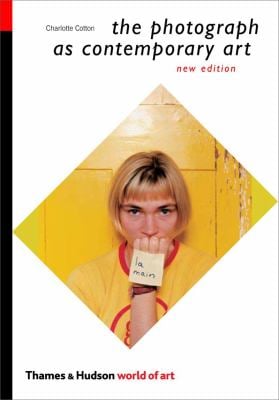
Charlotte Cotton's, "the photograph as contemporary art", which I now own has been a recent topic of discussion.
The pages specific to this discussion are 64-70 in chapter 2, "once upon a time".
Another blog featuring this particular chapter: http://imagingworkshop11.blogspot.co.uk/2011/01/reading-charlotte-cotton-once-upon-time.html

You can buy your copy from: 


What narratives are investigated by Cotton in the work discussed? What varied ideas are these works linked to?
Collected fears and fantasies, psychological powerful devices, childhood references and stories usually dramatized and given sinister edges, storytelling gone wrong in most cases. Some had troubling narratives but were linked to fashion. For example animals, birds, rituals, bizarre and disturbing psychological dramas.


untitled #2 (wonder)

untitled #2 (wonder), 1996. Chromogenic print, A.P. 2/2, edition of 5, 47 5/8 x 39 5/8 inches (120.8 x 100.6 cm). Solomon R. Guggenheim Museum, New York,Purchased with funds contributed by the Young Collectors Council  97.4577. © 1999 Anna Gaskell- 

These were all quite disturbing to look at, especially with the involvement of children, and the fact that their childhood memories of fairy tales and adventures were being totally transformed into sinister alternates of similar stories. I thought this could be the result of an unfortunate child who is rebelling at the idea of happy childhoods and would like to express their hurt and anger for not being able to experience what normal, happy children would experience. Or not even the child itself but a cry out for those who are victims of these experiences. I feel as if these images would not appear into someone's head without having some sort of recollection of the ideas around the subject, they are very powerful and effective however troubling and worrying views come to mind when viewing them. 


Artwork by Gregory Crewdson, "Twilight" 2002
Untitled, 2001
Digital C-print
Image size: 48 x 60 inches (121.9 x 152.4 cm)

 The use of sets and props compared with location and the environment, children as the subject and fashion models. Fashion and costume is frequently used with the references from stories which are extremely exaggerated. Landscape and Portrait photography and some combined together, also interior/architecture and perspectives and angles. The photographers reference film and fiction most in their work along with mild horror and Sci-fi. They use real people and children to create fake and unrealistic scenes and they exaggerate the things we most fear in the past and the future. For example the work above by Gregory Crewdson is very staged and fictional but there is an element of beauty within its' context. It's a very mysterious and intriguing body of work that again captures the essence of the paranormal and disturbing. Either way the images are very captivating and would have taken some time to produce.


Work made by Charlie White, "Ken's Basement", 2000

Contemporary is a very open term and can be discussed in many ways however I see the word and work relating to it, new and exciting with challenging and sometimes controversial aspects to it. Work in this genre can be visually striking with powerful meanings and there will always be new work emerging to back up a new and interesting idea. Photographers under this term use their experiences and personal references to express themselves and through their work. Contemporary doesn't always suggest modern but is something that's new to the art world and is there to provoke discussion and analysis. Some people would argue that contemporary art/photography is too different and hard to understand, but if everyone produced the same photographs in the same way you would get bored looking at it.


CHRISTOPHER STEWART United States of America 2002 
c-print
40 x 60 in / 122 x 152.4 cm


Does not liking a piece work make you disregard it completely? What happens if you pick a photograph/painting to pieces, would you discover a hidden meaning that you do prefer?